How we help
01
We make animal behaviour easier to see, interpret, and trust.
The aim is not to replace human judgement. It is to give people clearer welfare context around the animals they are already trying to understand.
About Vet Vision AI
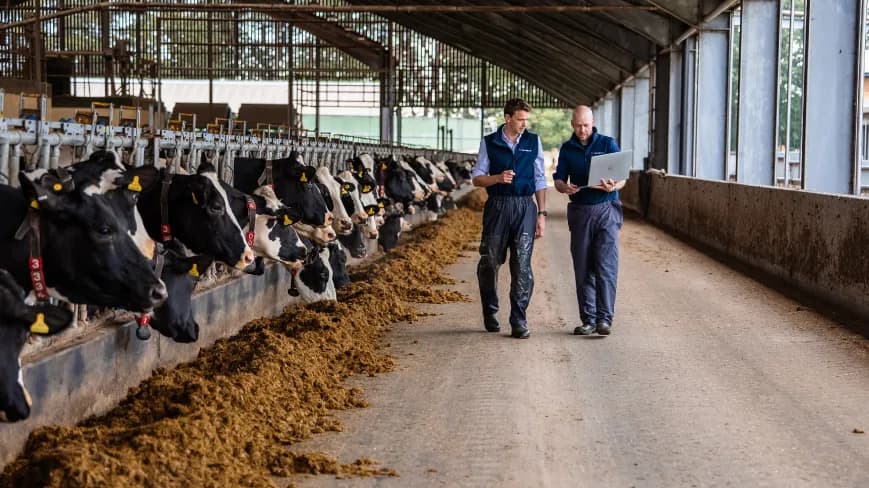
Built by vets and researchers, Vet Vision AI turns behaviour between checks into clearer welfare context for the people caring for cows and horses.
Why we exist
Animals tell us when something changes. Not in words, and not always during a scheduled check. Our work exists to help people understand those signals sooner, so care can be guided by context rather than guesswork.
01
The aim is not to replace human judgement. It is to give people clearer welfare context around the animals they are already trying to understand.
02
For farms, yards, and vets, that means better records, earlier context, and a shared view of what changed.
Research to field
Vet Vision AI began at the University of Nottingham with a practical aim: use subtle behaviour change to make animal welfare easier to understand. The work had to prove itself beyond the lab, in real sheds, stables, yards, and routines.
01
Subtle behaviour change can help people understand animal welfare before problems become obvious.
02
The work started with behaviour science and clinical judgement, not technology looking for a use case.
03
The idea became useful only when it worked around real routines, real buildings, and real care teams.
04
Vet Vision AI grew into a practical monitoring team led by vets, engineers, and animal behaviour specialists working around one shared belief.
05
The work now spans research, dairy farm deployments, equine environments, and carefully scoped partner programmes.
The people
Vet Vision AI is shaped by clinicians who know how much early context can matter. The monitoring matters, but the welfare judgement behind it matters more.

Co-founder & CEO
Charles combines a clinical veterinary background, a PhD using precision technologies to improve animal health, and an infectious enthusiasm for using tech to enhance animal health and welfare. He is hugely excited by the potential of computer vision to help improve animal health and welfare. At Vet Vision AI, Charles drives our strategy, helping the team create innovative technologies that solve critical challenges in veterinary care.

Co-founder & CTO
Robert combines expertise in AI and computer vision with specialist skills in veterinary science, gained over years of hands-on veterinary experience as a European and RCVS-recognised specialist veterinary surgeon and as an assistant professor in computational biology. Robert is focused on developing computer vision AI algorithms to improve animal health and welfare and make practical and accessible tools for vets, farmers, and animal owners to use.
Trusted where it matters
Retailer dairy programmes, ceremonial military stables, and professional equine yards all need the same thing: welfare context that is clear, continuous, and practical for the people using it.
Public dairy welfare materials from Sainsbury's and M&S reference Vet Vision AI in supplier-farm monitoring contexts, with programme wording kept specific to each partner.


Dairy supplier networks
King's Troop Royal Horse Artillery is referenced as an equine setting where round-the-clock welfare context matters between routine checks.

King's Troop
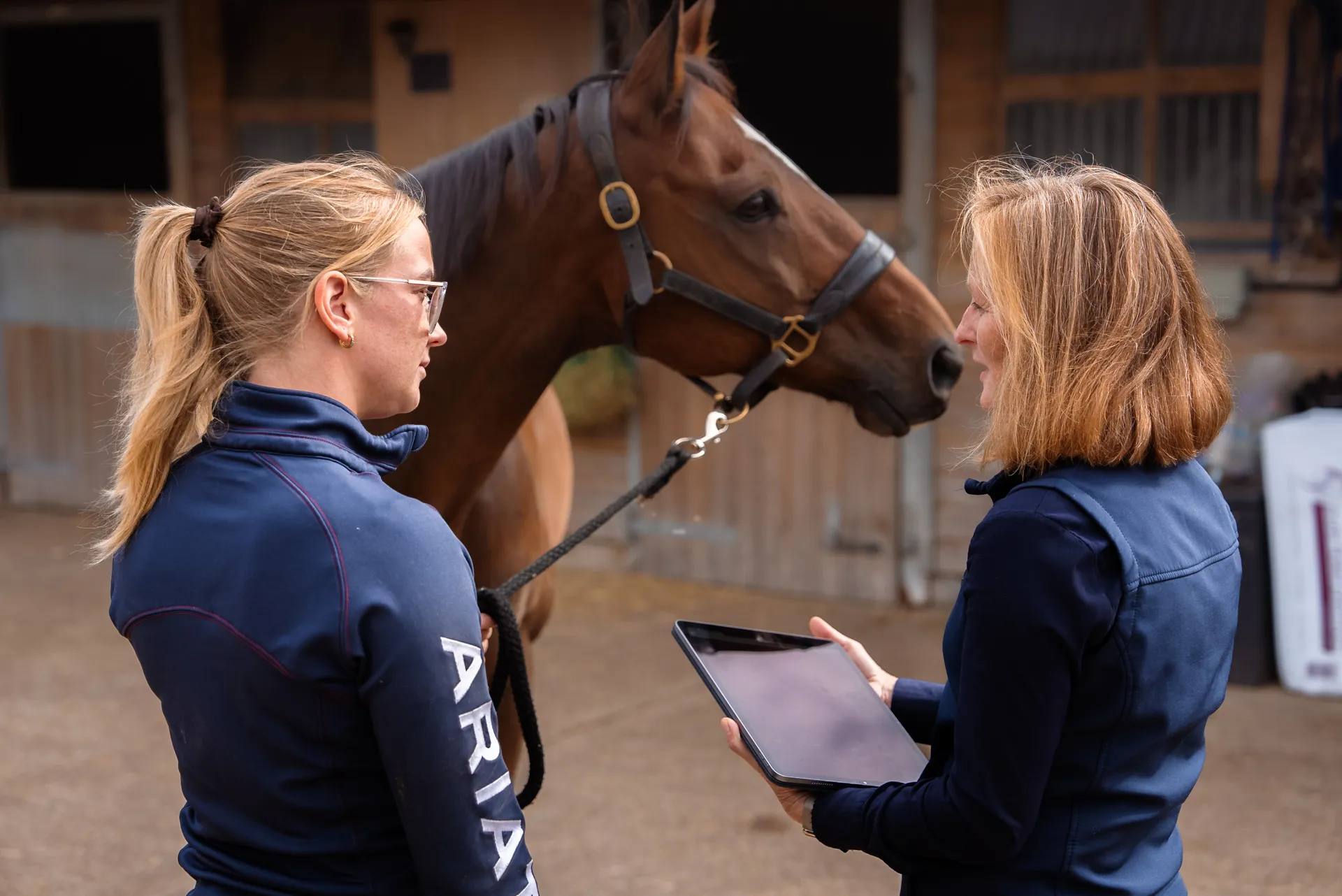
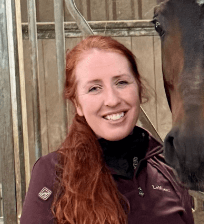
Elite riders and professional yards use Vet Vision AI where small changes in behaviour can matter quickly.
Becky Moody
Tell us what you care for. Vet Vision AI helps you understand what your animals are telling you.